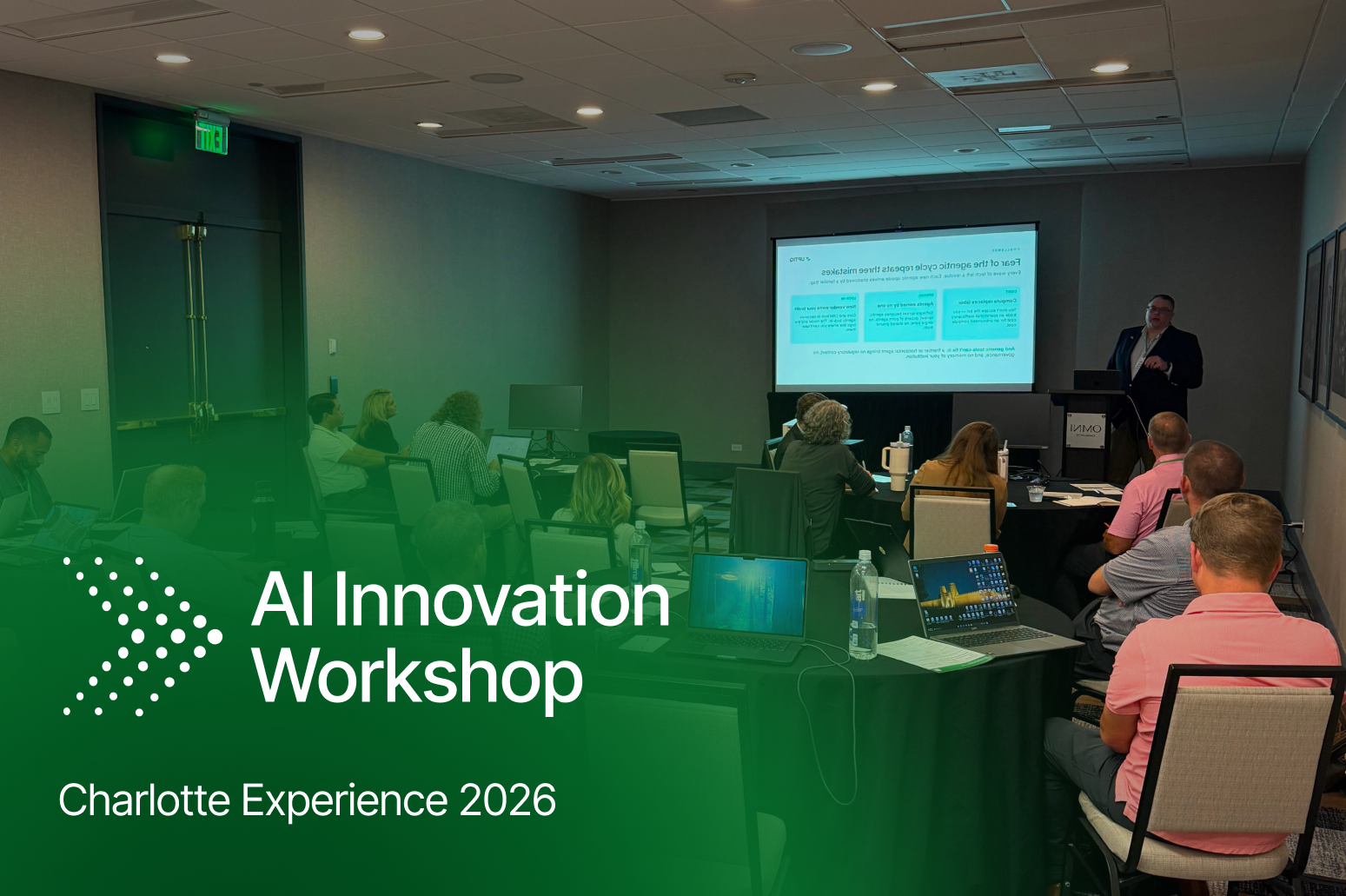
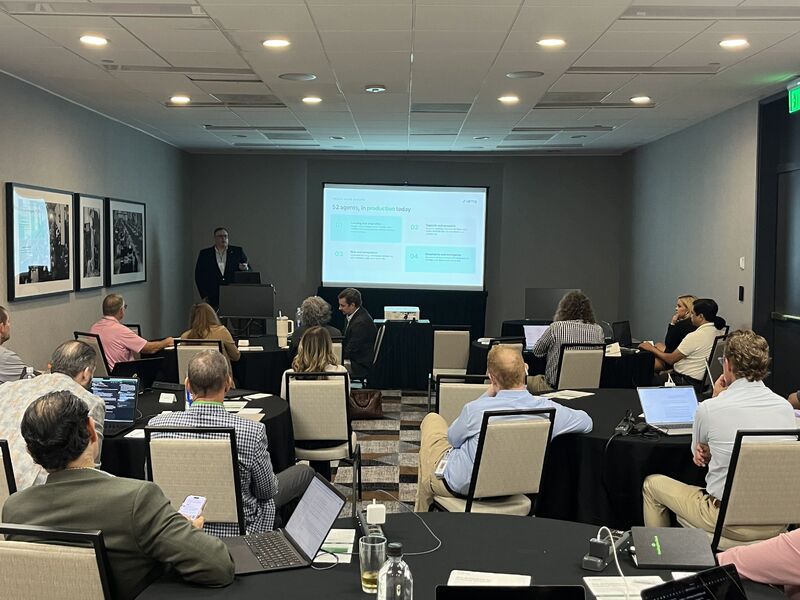
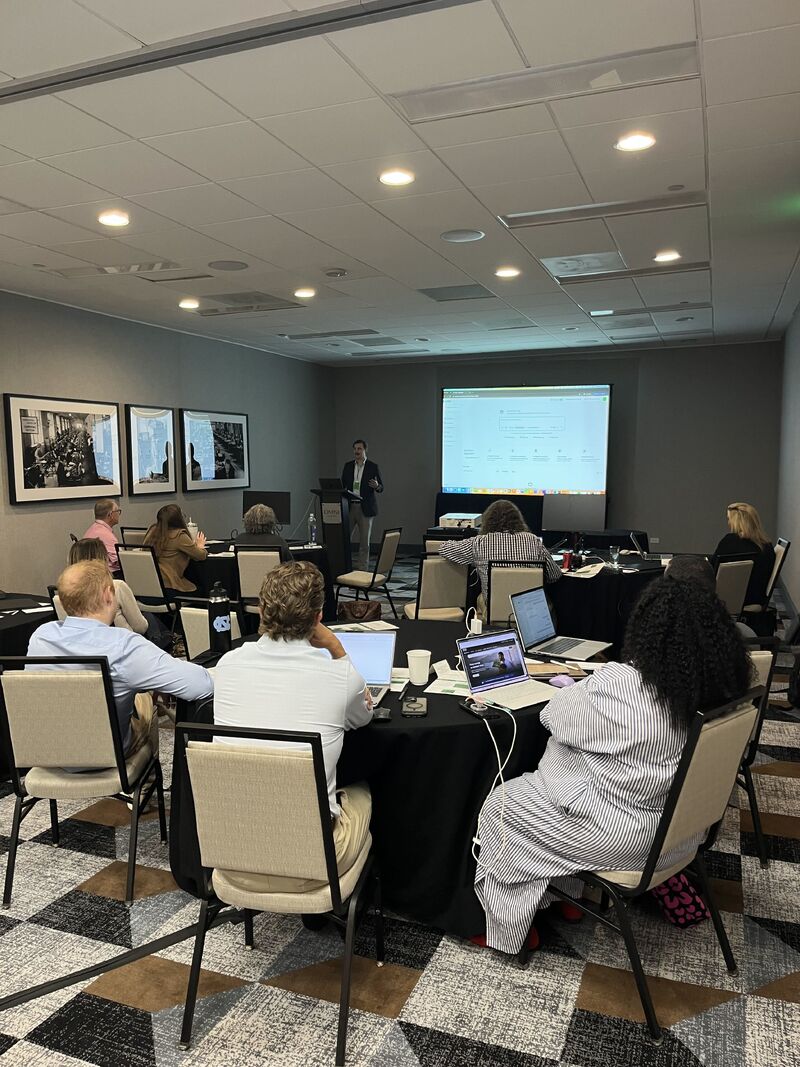
At Uptiq's first AI Innovation Workshop in Charlotte, we didn't pitch AI; we handed leaders the tools and asked them to build a working agent on a problem they already experience. What they built ranged from managing UCC filings to pricing complex loans to rethinking how new employees are trained. Here's a recap of the afternoon, what people built, and what they told us afterward.
An afternoon built around doing, not watching
Uptiq ran the first workshop in this series in Charlotte, NC. No day-long agenda, no wall of slides, no vague keynotes. One commitment instead: everyone leaves having built a working prototype on a problem they actually understand.
The institutions that joined us in Charlotte weren't there to be convinced that AI matters. What they wanted was a practical path from "AI sounds promising" to "AI is doing real work in our shop", and a chance to test it with their own workflows rather than sit through another vendor pitch.
Three builds, three problems people already understood
What stood out was how specific each build was. Nobody was building AI for its own sake; rather, each person took a process they knew cold and tested whether it could work differently.
Rethinking employee training. The most surprising build had nothing to do with lending directly. A participant started creating an interactive, game-based training experience for new employees, with progressive levels where a new teller could learn the essentials, build skills, and move through the material in a way that held their attention. It wasn't the most technically complex app built that day. It stood out because it challenged an assumption many teams make: that using AI means simply making an existing task faster.
Institutions spend enormous effort creating manuals and documenting institutional knowledge, and a new employee can have all of it in front of them and still not know what to do in the seat. This build asked a better question: what if the opportunity isn't to speed the task up, but to rethink the experience?
Managing 28,000 UCC filings. One participant took on UCC filings across states, different Secretary of State systems, filing requirements, law-firm templates, and unwieldy Excel files, at a volume that can reach upwards of 28,000 filings. The prototype explored pulling filings, identifying lien changes, flagging compliance issues, tracking expirations and continuations, and adapting to state-specific templates.
It isn't a flashy use case, and that's exactly the point. Some of the best AI opportunities are the operational problems everyone has simply learned to live with.
A loan-pricing question that got more sophisticated. Another started with a plain question: how should we price this loan? And a simple calculator that grew to cover C&I, CRE, and specialty lending, factoring in PD, LGD, capital, cost of equity, servicing costs, cost of funds, and hurdle rates. It could produce payment schedules, test deals against hurdle rates, calculate ROA, and suggest a minimum rate.
More telling than the output was the process: the workflow evolved as it was tested. You don't always need the perfect specification before you start building.
Compliance wasn't a side conversation; it was the thread
For a financial institution, an agent that produces the right answer but can't show its work isn't usable. That came up consistently in Charlotte, and it shaped how every build was considered.
"Bank-grade" was defined early and plainly: explainability, an audit trail, and human oversight. The concerns a regulator will insist on. You could see it in the builds themselves. The UCC agent didn't just track filings; it flagged compliance issues and continuations. Every prototype assumes a human stays in the loop on the decisions that matter. Compliance wasn't treated as a constraint to work around later. It was part of what made each agent worth building at all.
Why these workshops work
None of the participants opened with "we need an AI agent." They opened with "this part of my job is painful." That's a far better place to begin. They knew where information was scattered, which processes leaned on a spreadsheet that had quietly become mission-critical, and where people were spending hours on administrative work instead of decisions. That domain knowledge shaped every prototype; AI was just the execution layer. The people closest to the work have the clearest view of where the real opportunity is.
What attendees told us
"Prior to the workshop, we weren't sold on AI. This really solidified everything for us." — An attendee from a regional bank
"Easy to use for building agents that can service financial services, like loan processing. It takes time to build, but the product meets the specifications." — An attendee from a community bank
From our COO
"Loved the creative energy in the workshop. The solutions just keep getting more sophisticated as we go, and so does our understanding of how we land with the first bank-grade agentic platform.”
— Gaurav Mehra, COO, Uptiq
Where we go from here
Uptiq is taking the same hands-on approach to more cities. Bring the process that's slowing your team down, and see what you can build.
To join, reserve a seat at an upcoming AI Innovation Workshop.
Or, to see how this could look inside your own workflows, book a discovery call with Uptiq.
About the Author