
A banker from Florida typed instructions to build an agent into the platform, hit go, and got back something that surprised him. The agent he was building for a commercial loan had deduced, on its own, that the deal he was testing needed a flood insurance certification, because of where the property sat. It wasn't in his prompt. It wasn't in the sample policy. The agent had the domain knowledge to understand the requirement based on geographic location .
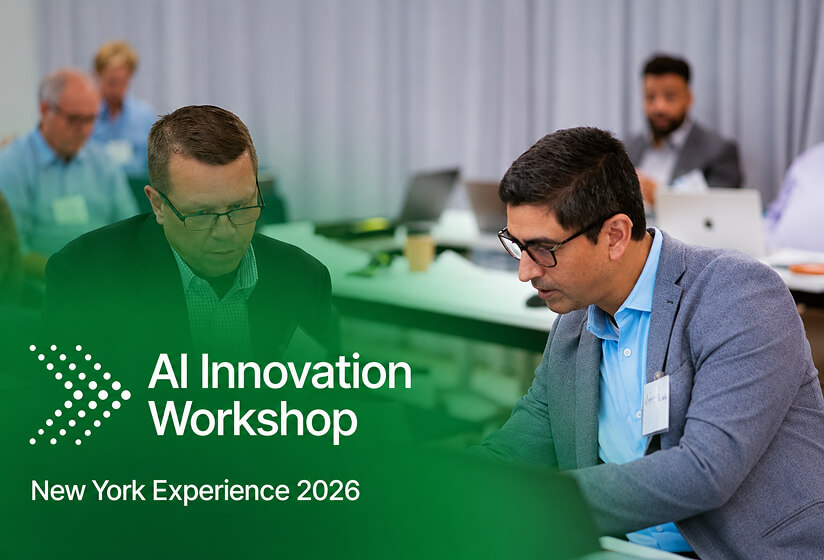
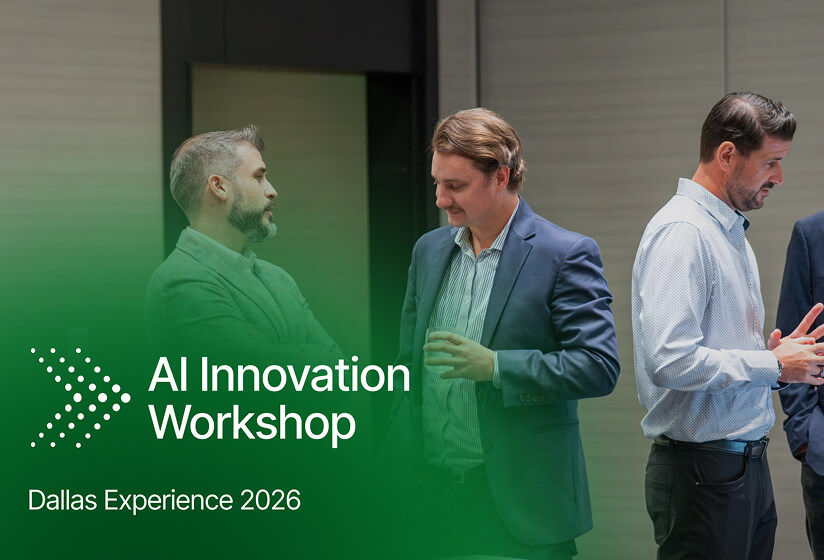
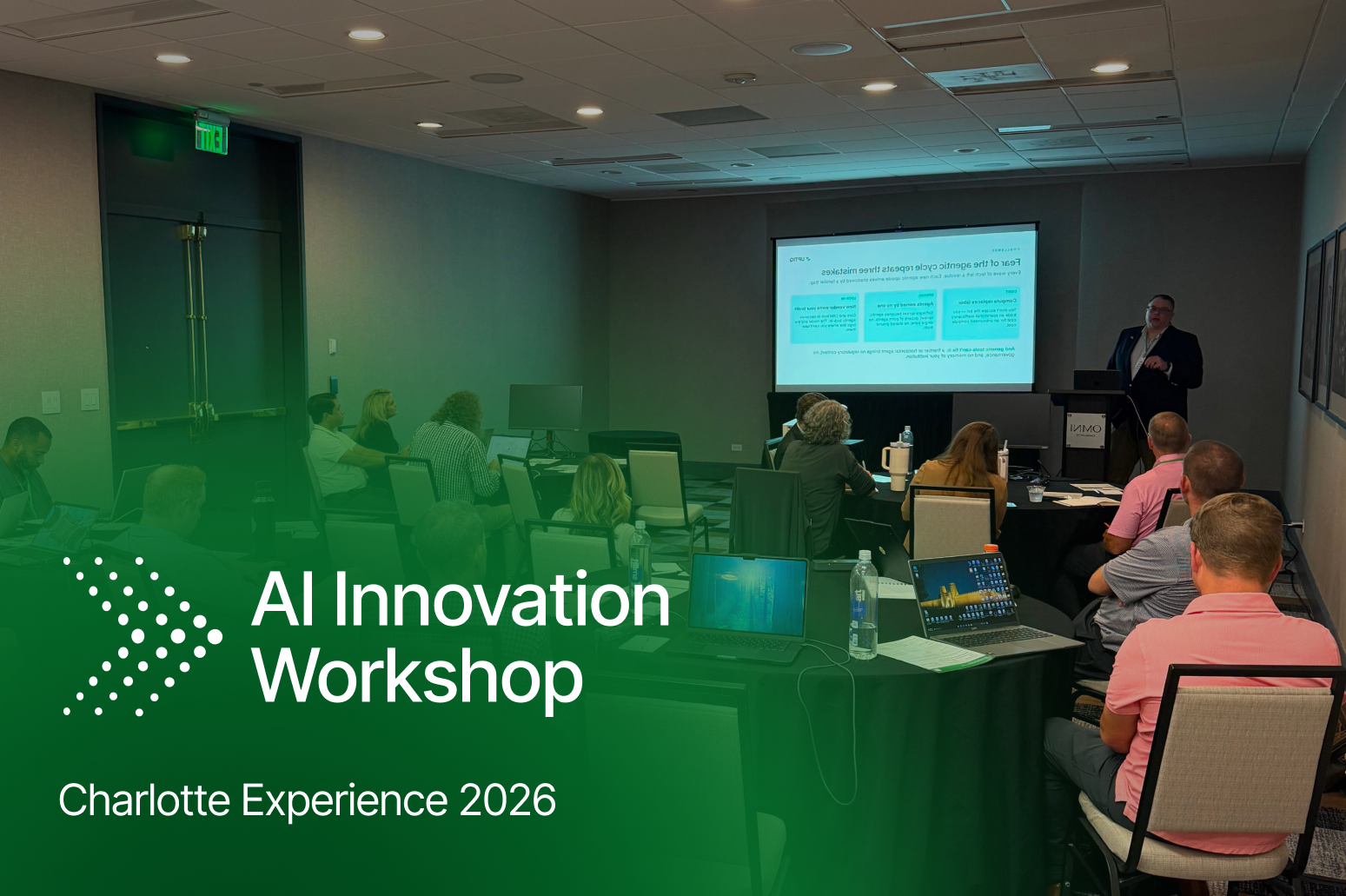
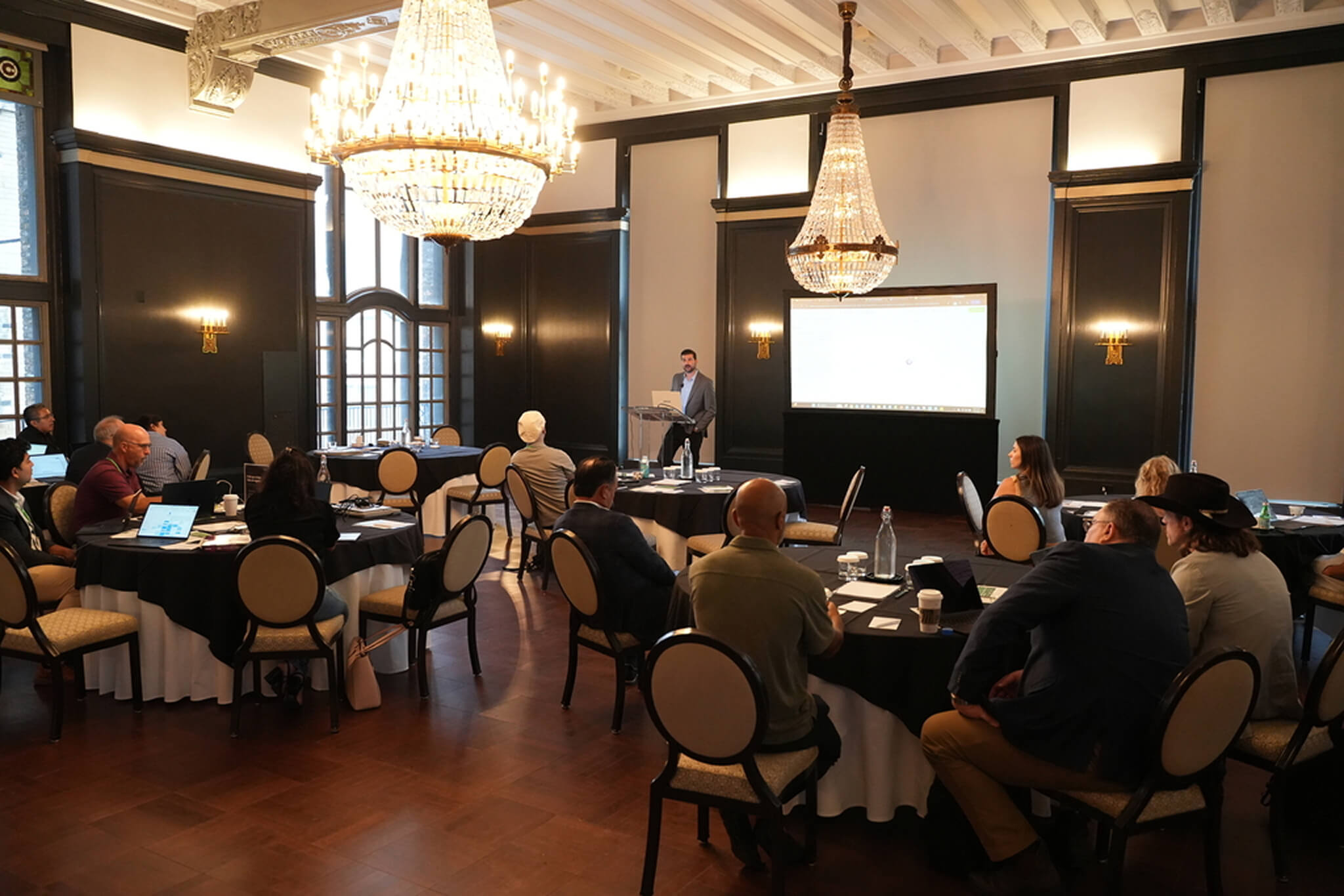
That small moment, repeated in a multiple variations, was the story of our AI Innovation Workshop in Chicago.
The 40 percent problem
An attendee building an agent for ACH watched it pull for Regulation E and Nacha rules. Someone building a compliance agent found it insisting on each relevant regulator, not just the one they'd named. Professionals brought a fragment of a concept and the platform returned a fully-formed one.
The way we describe it is that you tend to bring about 40 percent of what you're envisioning an app or agent to do, and the platform supplies the other 60, the rules, the requirements, and the domain judgment a seasoned operator would know to fold in. That is the line between a clever tool and one built for regulated work trained on real workflows of a financial institution. It doesn't just perform the task you describe; it understands what the task requires.
What attendees built
A credit memo's first draft, done before the meeting. One participant built an application that assembles a complete draft credit memo, from executive summary to analyst recommendation pulling borrower data, spreads, collateral, and market research into one place. What made it memorable was how she tested it. She deliberately fed it an imperfect file, leaving out a tax return, to see whether the agent would notice. It flagged the missing document, checked whether the financials it had gathered were current, and caught a discrepancy between the balance sheet and the aging report, warning that the affected calculations couldn't be trusted.
The best part was where it stopped. It organizes the evidence, drafts the recommendation, and asks the questions a chief credit officer would ask, what's missing, what's stale, what conflicts, but it doesn’t replace expert judgment. It hands the analyst a defensible starting point, with a full record of every change along the way.
Loan renewals that run themselves, within limits. Another participant built an automated renewal engine that works a deliberately narrow set of rules: loans maturing today, booked and open, under a set dollar threshold, above a set risk rating. It runs a credit check, and only borrowers who clear the score bar renew automatically. Everyone else waits for a person.
It's an unglamorous build, and that's precisely why it worked. The value wasn't ambition; it was drawing the eligibility box tightly enough that the routine renewals disappear into the background while every judgment call still reaches a professional.
Payments that won't skip a regulation. One participant built a compliant payments orchestrator, an agent grounded in Regulation E, Nacha, and UCC Article 4A that walks a transfer from KYC through to tracking against a checklist, so no regulatory step slips. In a room full of people who move money for a living, it made a simple point: speed only counts if every payment can still stand up to an examiner.

Whose data is it?
A sharp room asks sharp questions, and one of those questions in Chicago was what every institution raises: where is the wall between our data and yours?
Each institution's data lives in its own isolated tenant. Nothing crosses between institutions. Personal information is masked, and only the resulting intelligence is used to produce an output. For a room weighing whether to trust an AIplatform with regulated, sensitive material, a clear answer to that question matters as much as any capability on the screen.
Where we go from here
If Chicago underlined anything, it's that the fastest way to see what AI can do for your institution is to build something yourself and let the platform supply the expertise around your idea. You don't need to arrive with the whole thing figured out.
The road show continues. Bring the process you'd most like to hand off, and reserve a seat at an upcoming AI Innovation Workshop — or book a discovery call to see what this could look like on your own data.
About the Author