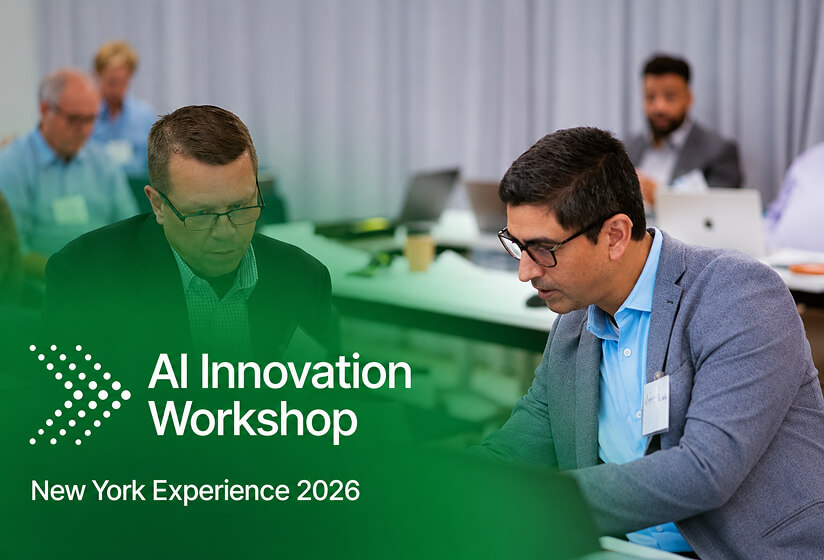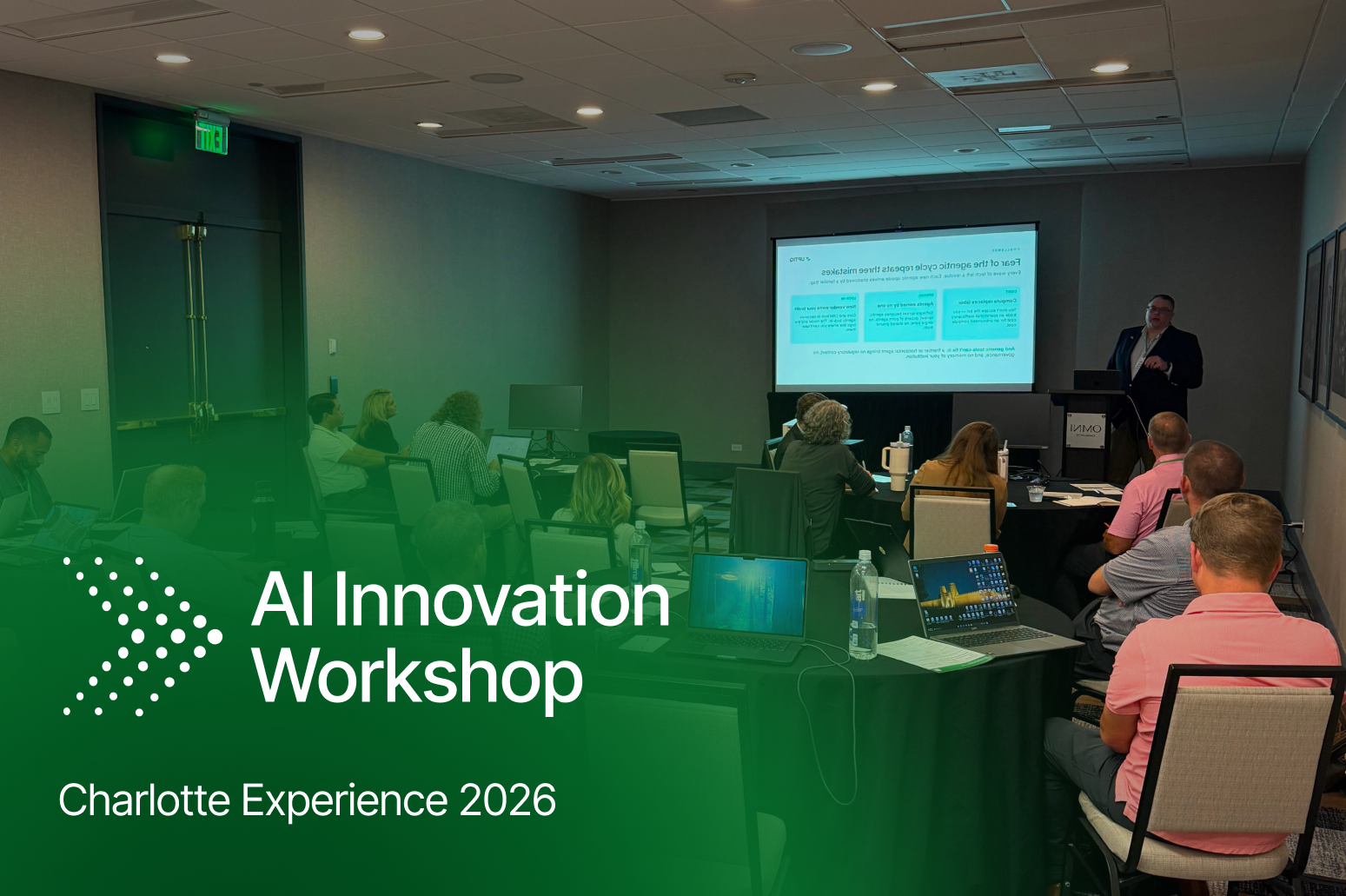
Lenders walked in with a problem. They walked out with an agent. Dallas was one of the latest stops in Uptiq's AI Innovation Workshop roadshow.
A covenant tracker. An AML alert triage tool. A board package generator. An appraisal reviewer. Each one built in an afternoon, by a lender, on a challenge they deal with every week.
If Dallas made one thing plain, it's that the distance between an AI idea and a working agent is far shorter than most institutions assume, often a plain-language description and a few minutes. That's the whole reason we run these in person: the moment a leader watches their own workflow become an agent and an app, the conversation stops being about whether AI is ready and starts being about what to build next.
What attendees built
Monitoring covenants across the portfolio. One team took on covenant surveillance, the kind of tracking that usually lives in spreadsheets and someone's memory. The prototype pulled covenant test dates and reporting requirements straight out of the loan agreements, tested each covenant as new borrower financials arrived, and returned pass/fail results with the underlying calculations shown.
Triaging a flood of AML alerts. Another took on the alert fatigue that consumes a financial-crime team's week. The build scored each transaction-monitoring alert by risk, cleared the obvious false positives with a documented rationale, and, for the ones that warranted it, drafted a FinCEN-style SAR narrative ready for review.
What made it a strong build wasn't the automation. It was where the team drew the line: the agent prepares the case, but it never files. That decision stays with the BSA officer.
Rethinking the monthly board package. One participant started with the monthly scramble to pull a board package together. Rather than automate a document, the build drafted the KPI summaries, loan and deposit trends, and capital narratives in the bank's own voice, then handed executives a version-controlled draft to edit and approve, never using a figure it couldn't trace back to source.
Appraisal review, on the bank's own checklist. And one built an agent to run appraisal reviews against the bank's loan policy, FDIC regulations, and USPAP guidelines, following the very checklist a human reviewer completes today. The point wasn't to replace the reviewer, but to hand them a first pass that already fits the process they trust.
What stands out across all four isn't the sophistication of any single agent; it's that each was grounded in the institution's own policy and left the final decision to a person, that is what bank-grade is all about. That's the line between a workshop demo and something a financial institution can actually put to work.
What "bank-grade" actually means
For a regulated institution, an agent that produces the right answer but can't show its work isn't usable. "Bank-grade" is the term we use for the standard that makes an agent deployable, and it rests on three things:
- Grounded. The agent understands the specific institution, its products, policies, and regulatory footprint, rather than relying on a generic model's assumptions.
- Provable. Every decision traces back to the authorized policy behind it, with a complete audit trail. When a policy changes, the agent adjusts or stops. If the work is ever audited, what happened is not only provable but articulable.
- Governed. Human oversight sits on the sensitive actions, with the controls an IT team needs to certify, publish, and roll back, alongside guardrails such as PII filters and a control to halt an agent immediately if it moves out of bounds.
That standard is what separates a prototype an institution can take somewhere from a demo it applauds and forgets.
What attendees told us
"Intuitive, impressive capabilities for a range of technology skill levels." — An attendee from a regional bank
"Very fun to do. It provided a lot of insights for a non-technical person." — An attendee from an equipment finance company
"A hands-on, smart approach to introduce technology. The knowledgeable team on hand was great." — An attendee from a community bank
Where we go from here
Uptiq is taking the same hands-on approach to more cities. Bring the process that's slowing your team down, and see what you can build.
To join, reserve a seat at an upcoming AI Innovation Workshop.
Or, to see how this could look inside your own workflows, book a discovery call with Uptiq.
About the Author