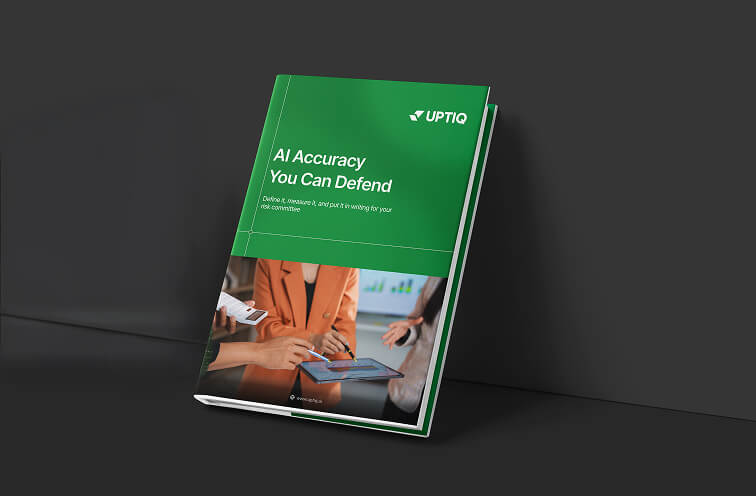
AI Accuracy You Can Defend
Define it, measure it, and put it in writing for your risk committee.
Every AI evaluation starts with the same question: “How accurate is it?” It can’t be answered as asked. One percentage doesn’t tell your risk committee what was measured, against what, or who agreed. Trying anyway is a leading reason AI programs stall in pilot.
The way out is accuracy you can defend. The person who owns the decision defines it, you measure it against the right standard, and you put it in writing before anyone builds anything. Accuracy belongs to a use case, not a model. For some tasks, the definition is simple. For the hardest, such as underwriting, no objectively correct answer exists, so the standard has to come from your own decisions.
This guide gives you six tools:
Define it
Measure it
Put it in writing
Most examples come from lending: commercial, SMB, consumer, and mortgage. The same logic applies to onboarding, deposits, digital banking, and cross-sell.
This guide won’t hand you a universal accuracy score. For the hardest decisions, none exists. It shows you how to build one you can stand behind.
Define accuracy first. Let the domain expert own it. Tier it by use case. Ground it in your institution’s own decisions. Put it in writing, and keep improving it with explained feedback.