Automate complex document extraction and financial spreading so your underwriters can focus on risk judgment and make same-day credit decisions.


Reduce the time spent reviewing documents, re-keying data, and building spreads so underwriters can focus on analysis and credit decisions.


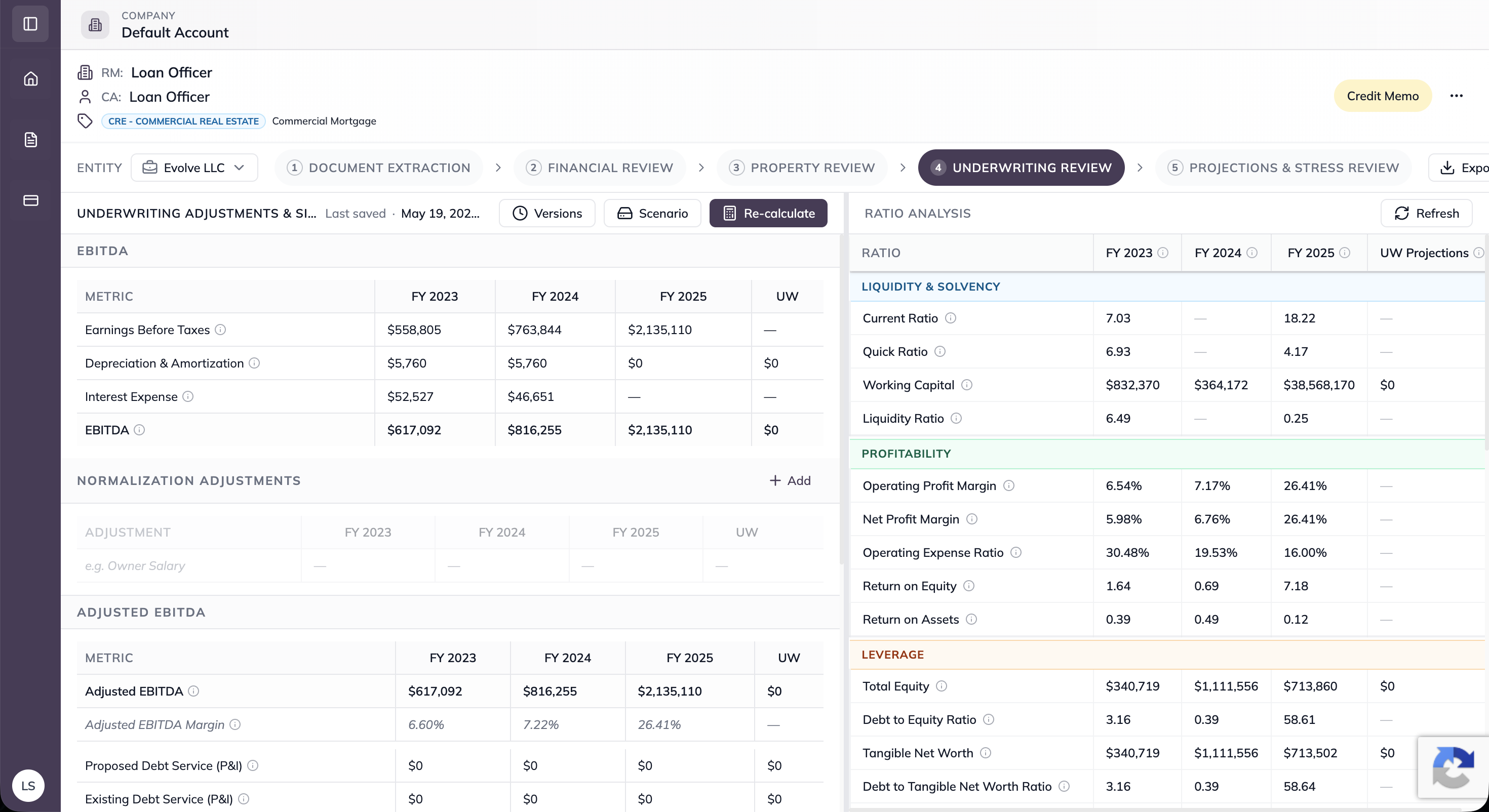
The Uptiq Financial Spreading Agent helps financial institutions automate one of the most time-consuming parts of the lending process: financial spreading and analysis. Instead of having analysts manually review financial statements, tax returns, and supporting documents, the agent extracts the required data automatically, organizes it into your preferred spreading format, and generates the calculations needed for credit evaluation.
The result is faster processing, greater consistency across applications, and more time for lending teams to focus on credit decisions rather than manual data entry and document review.
The agent is designed to handle the wide variety of financial documents lenders receive from borrowers. It can ingest profit and loss statements, balance sheets, tax returns, and other supporting financial records, even when formats vary from one borrower to another.
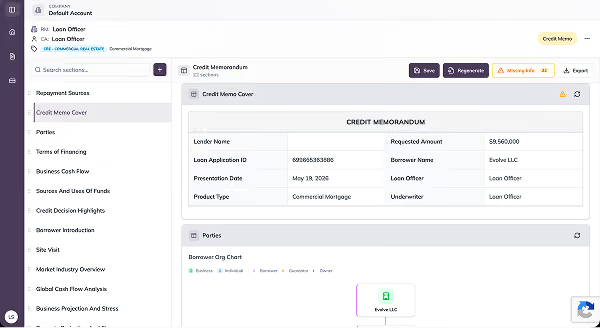
The system automatically extracts and standardizes the data, maps line items to your institution's templates, calculates key credit metrics such as DSCR and leverage ratios, and evaluates results against your lending policies. Any exceptions, inconsistencies, or potential risk indicators are surfaced for review, helping underwriters reach decisions faster with less manual effort.
The Financial Spreading Agent is designed to work alongside your existing technology environment rather than replace it. Through a library of more than 100 pre-built integrations and APIs, the agent can connect with leading Loan Origination Systems, core banking platforms, CRMs, document management systems, and other operational tools. Once connected, data can move automatically between systems without requiring users to switch applications or duplicate work. Your lending teams continue using the tools they already know while the agent handles data extraction, spreading, and analysis in the background.
Most financial institutions can deploy the Financial Spreading Agent and begin realizing value within days to a few weeks, depending on the complexity of their environment and integration requirements. Uptiq works closely with your team to define workflows, configure underwriting policies, establish data mappings, and connect the necessary systems. Since the agent is designed to integrate with existing infrastructure, there is no need for a disruptive rip-and-replace project. This allows institutions to modernize key underwriting processes without interrupting day-to-day lending operations.
Yes. The Financial Spreading Agent is built to meet the security, governance, and compliance expectations of regulated financial institutions. Uptiq maintains SOC 2 Type II certification and incorporates enterprise-grade controls to protect sensitive borrower information.
Every extracted field, calculation, and recommendation is linked back to the original source document, creating a complete audit trail that supports transparency and accountability. This level of traceability helps institutions satisfy internal risk requirements while maintaining confidence in how financial data is processed and analyzed.
Yes. Every institution has its own underwriting methodology, spreading conventions, and credit policies, which is why the Financial Spreading Agent is highly configurable. Teams can customize spreading templates, ratio calculations, policy thresholds, exception rules, and review workflows to align with their existing credit process.
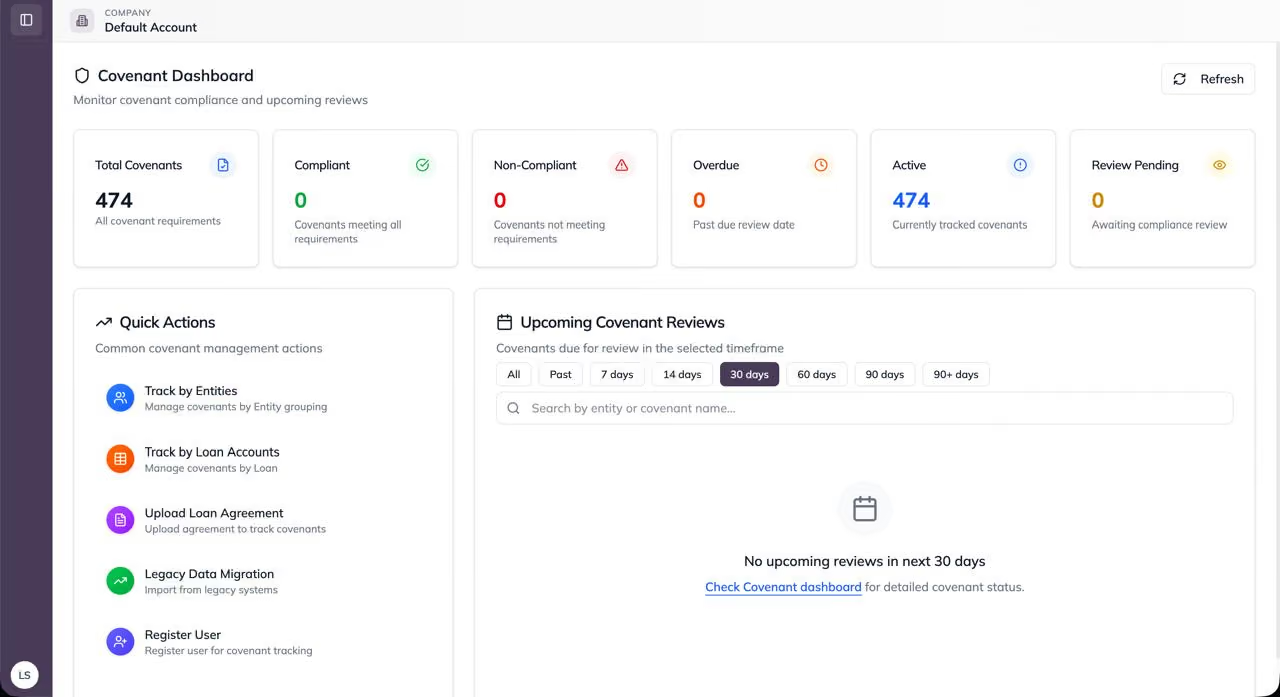
The agent can automatically compare calculated metrics against your institution's lending guidelines and flag any policy breaches, missing information, or unusual trends that require attention. This ensures consistency across underwriting teams while preserving the flexibility needed to support your unique credit strategy.
Our team handles scoping, configuration, and go-live. Most financial institutions are in production within 5 business days, with no rip-and-replace of existing systems required.