Continuously monitor borrower health, financial performance, and reporting requirements. Catch risk earlier and manage relationships more effectively.
After funding, monitoring drops to spreadsheets and follow-ups, so statements arrive late and risks stay hidden until annual reviews. As portfolios grow, teams lose visibility and intervention slows.
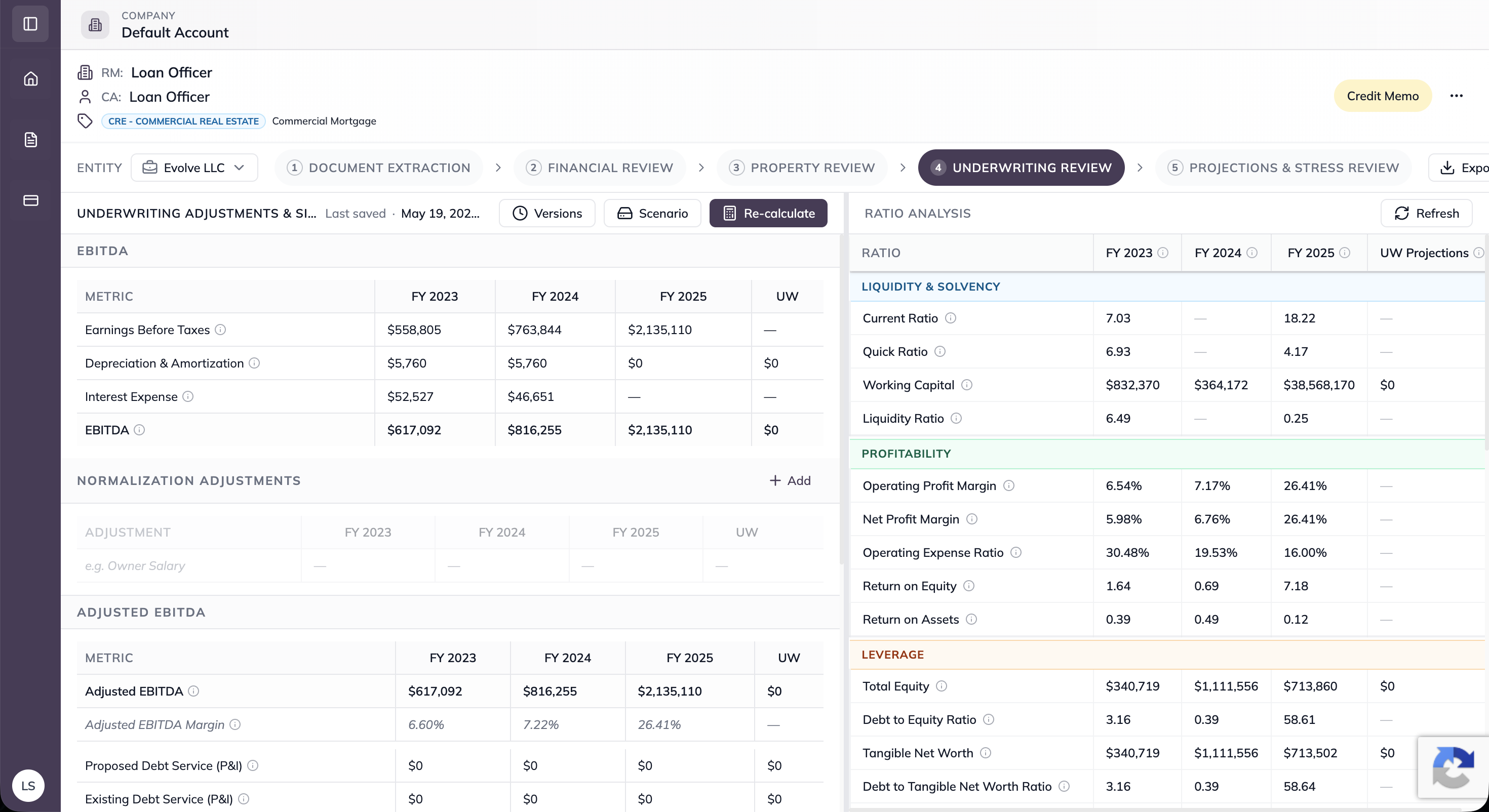
Automate portfolio oversight, collecting borrower data, evaluating financial performance, tracking reporting obligations, and flagging emerging risks across the life of the loan.
Continuously tracks borrower performance
Automates collection of required reports
Analyzes financial trends and performance
Identifies emerging borrower risks early
Measurable impact from small business lenders and financial institutions that have deployed the Continuous Monitoring Agent.

Automates borrower intake, document collection, business verification, and application preparation before underwriting begins.

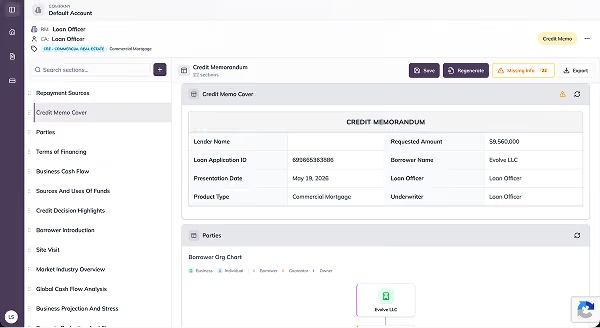
Automates financial analysis, risk assessment support, and credit memo preparation to accelerate lending decisions.
Many portfolio teams still rely on spreadsheets, calendar reminders, and manual follow-ups to track borrower performance. The challenge is that these processes become harder to manage as portfolios grow. The Continuous Monitoring Agent replaces those manual workflows by automatically tracking reporting requirements, collecting borrower submissions, and analyzing incoming financial information.
Instead of waiting for periodic reviews, lenders gain ongoing visibility into borrower health as new data becomes available. Teams spend less time maintaining spreadsheets and more time focusing on risk management, portfolio growth, and borrower relationships.
Missing financial statements, tax returns, and covenant reporting requirements can quickly create operational bottlenecks. The Continuous Monitoring Agent automatically tracks borrower obligations and reporting schedules, then follows up when required documents have not been submitted. Rather than relying on manual reminder processes, portfolio teams receive clear visibility into outstanding items and upcoming deadlines.
This helps ensure reporting requirements are addressed proactively while reducing the administrative burden on relationship managers and portfolio teams. The result is a more consistent monitoring process and fewer compliance gaps across the portfolio.
Traditional portfolio reviews often happen weeks or months after important borrower information becomes available. By then, early warning signs may already have been missed. The Continuous Monitoring Agent continuously evaluates borrower financial performance, reporting activity, cash flow trends, covenant compliance, and policy exceptions as new information enters the system.
It looks for patterns that could indicate increasing risk and surfaces those findings to portfolio teams. This allows lenders to move from reactive reviews to proactive portfolio management, helping identify potential issues earlier and giving teams more time to engage borrowers before risks become larger problems.
Yes, our agent is designed to fit into existing lending environments rather than replace them. Through pre-built integrations and APIs, Uptiq connects with servicing systems, loan origination platforms, CRM solutions, document repositories, and core banking systems. Information flows automatically between systems, eliminating duplicate work and reducing manual data transfers.
Portfolio teams can continue using the tools they already rely on while the Continuous Monitoring Agent handles tracking, analysis, and monitoring activities behind the scenes. This approach allows institutions to modernize portfolio oversight without undertaking costly infrastructure replacement projects.
Most lenders review borrower performance on a quarterly, semi-annual, or annual basis. While those reviews remain important, they often provide a delayed picture of portfolio health. The Continuous Monitoring Agent takes a different approach by updating monitoring activities whenever new borrower information is received.
Financial statements, tax returns, covenant reports, and other submissions automatically trigger fresh analysis. This creates a continuously updated view of borrower performance rather than relying solely on scheduled review cycles. As a result, lenders gain faster visibility into emerging risks, changing financial conditions, and compliance issues across the portfolio.
Yes. The platform is built specifically for regulated financial services environments where transparency, governance, and auditability are critical. Every borrower interaction, document submission, review activity, and monitoring action is recorded with a complete audit trail. Teams can easily trace how information was collected, reviewed, and analyzed throughout the monitoring lifecycle.
This level of visibility supports examiner expectations, internal governance requirements, and compliance initiatives while helping institutions maintain strong oversight across their lending portfolios. Security and accountability are built into the platform from the start.
Traditional portfolio management systems are effective at storing information and tracking borrower records, but much of the actual monitoring work still happens manually. Teams often spend significant time collecting reports, reviewing financials, tracking covenant requirements, and identifying exceptions.
The Continuous Monitoring Agent automates these activities. It actively collects information, evaluates borrower performance, monitors reporting obligations, and surfaces emerging risks without requiring constant manual intervention. Instead of simply tracking portfolio data, it helps lenders continuously analyze and manage portfolio health, allowing teams to focus on higher-value risk management activities.
Deployment timelines are typically measured in days or weeks rather than months. Because the Continuous Monitoring Agent works alongside existing systems, there is no need for large-scale replacement projects or major process redesigns. Uptiq manages configuration, integrations, testing, and implementation while aligning the solution to your monitoring workflows and reporting requirements.
Many institutions start with a specific portfolio segment or use case and expand over time as results are demonstrated. This phased approach helps lenders achieve faster time-to-value while minimizing operational disruption and implementation risk.
Our team handles scoping, configuration, and go-live. Most lenders are in production within 5 business days, with no rip-and-replace of existing systems required.