

With Uptiq, replace long build cycles, technical dependencies, and infrastructure complexity with AI-powered development so you can launch your Fintech products, test them, and scale faster.
Design AI-native products that scale from day one, supporting higher user volumes and transactions without growing operational teams.
Build products with structured, AI-driven workflows that reduce human error and improve consistency across financial processes.
Avoid heavy engineering investments and reduce ongoing operational overhead with pre-built AI infrastructure and automation.

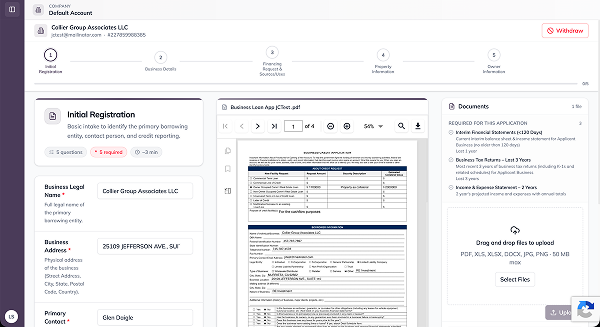
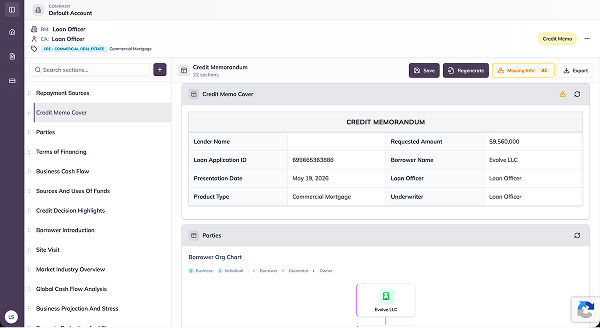
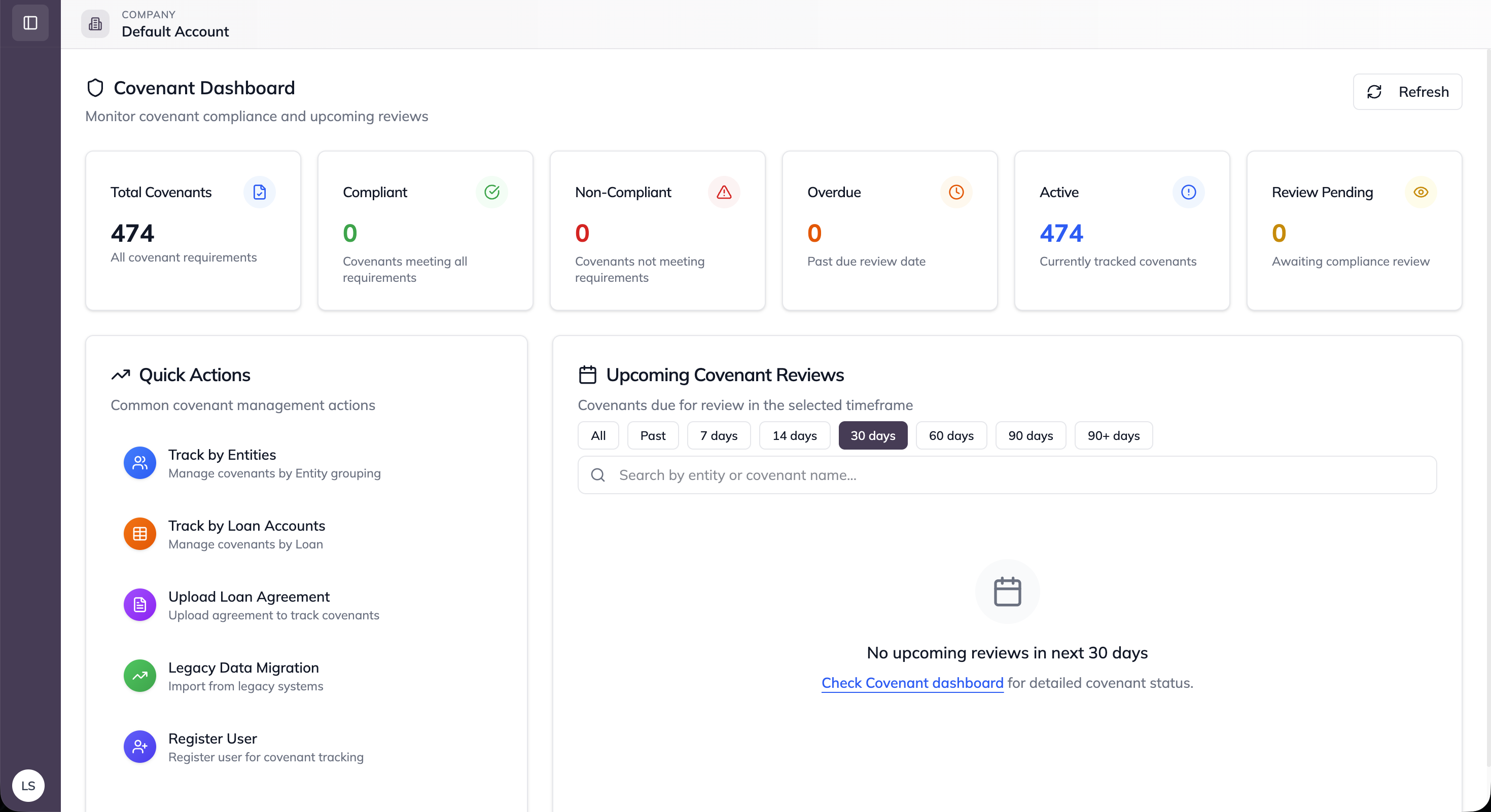
A complete AI lending stack designed to automate intake, underwriting, and post-close workflows, without replacing your existing systems.

Use our platform QORE to design and launch AI agents tailored to your workflows, without needing a full engineering team.
From ready-to-deploy agents to custom builds, Uptiq combines AI, workflows, and compliance to automate and scale fintech operations.
Use ready-to-use capabilities for document processing, analysis, and validation to accelerate developmen
Leverage modular components designed for financial workflows to reduce build time and ensure consistency.
Define workflows, approvals, and decision paths across agents to run processes seamlessly end-to-end.
Apply audit trails, governance rules, and controls to ensure every action stays compliant and traceable.
No complex integrations required. AI agents built on our platform connect with your existing systems out of the box, enabling them to operate across workflows securely, with enterprise-grade compliance built in.
Our platform is designed for fintech teams operating in controlled, compliance-driven environments. From data handling to workflow execution, every layer is structured to meet enterprise expectations.
AI in fintech refers to the use of artificial intelligence to automate, analyze, and improve financial services workflows, from onboarding and underwriting to fraud detection and customer engagement.
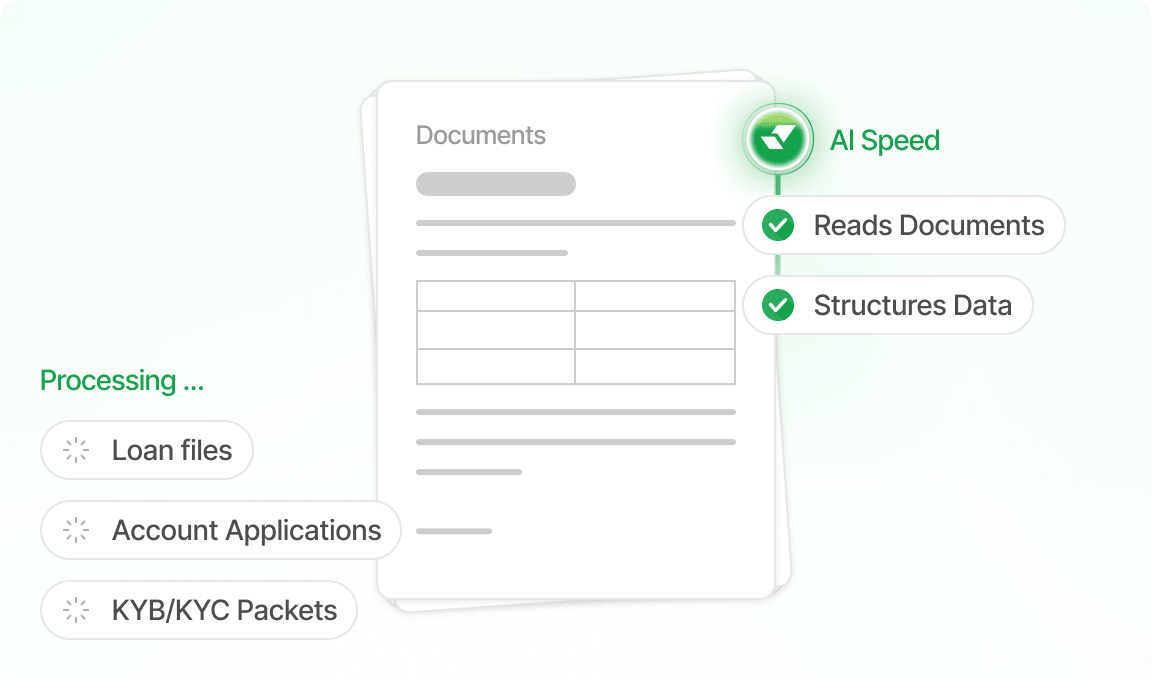
Traditional systems digitize processes, but AI for fintech executes them. It reads documents, extracts data, evaluates risk, and generates decisions without manual intervention.
Fintech AI platforms can process loan applications, verify documents, and detect fraud in real time, reducing turnaround from days to minutes.
AI in fintech becomes more accurate over time by learning from historical data, patterns, and outcomes, making each decision smarter than the last.
By automating repetitive work, AI solutions for fintech allow companies to serve significantly more customers without increasing operational teams.
The benefits of AI in fintech extend across efficiency, cost, customer experience, and competitive advantage.
AI solutions for fintech reduce manual effort across onboarding, underwriting, compliance, and servicing, cutting processing time by up to 60–80%
Fintech companies using AI can handle 2–3x more transactions or customers without expanding headcount, as AI absorbs operational workload.
Fintech AI enables instant responses, real-time decisions, and personalized financial services, improving satisfaction and engagement.
Automation lowers costs by minimizing manual work, reducing errors, and optimizing resource allocation across workflows.
AI in fintech improves fraud detection, ensures consistent policy application, and identifies risks earlier in the lifecycle.

AI use cases in finance span both customer-facing and back-office operations, making fintech AI platforms valuable across the entire lifecycle.
AI for fintech automates financial analysis, processes documents, and evaluates credit risk using structured and unstructured data sources.
Fintech AI platforms monitor transactions in real time, detect anomalies, and prevent fraud before it impacts customers or institutions.
AI solutions for fintech automate identity verification, document validation, and compliance checks, reducing onboarding time from days to minutes.
AI analyzes user behavior and financial data to deliver tailored product recommendations, insights, and advice at scale.
AI agents and chatbots handle routine queries, enabling 24/7 support while reducing the burden on human teams.
AI in fintech continuously monitors transactions and workflows to ensure adherence to evolving regulatory requirements.
AI in fintech doesn’t just improve existing systems; it changes how financial work gets done.
Modern fintech AI platforms are designed to integrate seamlessly with existing infrastructure, enabling faster adoption
Leverage ready-to-use capabilities or build your own — and compose agents faster with reusable intelligence across workflows.

Design and run complex financial workflows that combine agents, rules, and real-time data — from intake to underwriting to servicing — without manual handoffs.

Route tasks across multiple LLMs based on use case, cost, and accuracy — while maintaining consistency, traceability, and performance across workflows.

Embed audit trails, policy enforcement, and human-in-the-loop controls directly into execution — ensuring regulatory compliance without slowing down operations.

Embed audit trails, policy enforcement, and human-in-the-loop controls directly into execution — ensuring regulatory compliance without slowing down operations.
Design and run complex financial workflows that combine agents, rules, and real-time data — from intake to underwriting to servicing — without manual handoffs.
Fintech AI platforms process incoming data instantly and update systems automatically, eliminating manual data transfer.
Embed audit trails, policy enforcement, and human-in-the-loop controls directly into execution — ensuring regulatory compliance without slowing down operations.
Banks are operating in a lending environment defined by speed, automation, and rising borrower expectations, yet many still rely on legacy systems and manual processes that slow deal flow and strain teams.
Processing times for applications, onboarding, and transactions are reduced by 60–80%, improving overall throughput.
Teams can handle 2–3x more customers or transactions without increasing staff, enabling scalable growth.
Automation reduces expenses by 25–40% through fewer manual tasks, reduced errors, and better resource utilization
Faster decision-making and personalized offerings improve conversion rates and unlock new customer segments.
AI improves fraud detection, enhances credit risk assessment, and ensures consistent compliance across operations.
AI-driven insights help lenders and financial teams make faster, data-backed decisions with greater consistency and confidence.
Security and compliance are critical components of any AI solution for fintech.
Fintech AI platforms use encryption, role-based access, and secure infrastructure to protect sensitive financial data
Every decision made by AI is traceable, with clear documentation of data sources and logic used.
AI in fintech is designed to align with financial regulations, including audit requirements and reporting standards
AI systems are regularly tested to ensure decisions remain fair, consistent, and compliant with lending regulations.
Ongoing monitoring, validation, and control mechanisms ensure AI systems operate safely and effectively.

Security and compliance are critical components of any AI solution for fintech.
Define workflows, business rules, and use cases to align AI with your operations.
Connect AI solutions for fintech to your existing systems and ensure data flows correctly.
Validate outputs using real scenarios and refine performance to meet operational standard
Deploy AI in a controlled environment to monitor performance and optimize workflows.
Expand AI across operations and continuously improve performance over time.

Choosing the right fintech AI platform is critical for long-term success.
Leverage ready-to-use capabilities or build your own — and compose agents faster with reusable intelligence across workflows.

Design and run complex financial workflows that combine agents, rules, and real-time data — from intake to underwriting to servicing — without manual handoffs.

Route tasks across multiple LLMs based on use case, cost, and accuracy — while maintaining consistency, traceability, and performance across workflows.

Embed audit trails, policy enforcement, and human-in-the-loop controls directly into execution — ensuring regulatory compliance without slowing down operations.

Embed audit trails, policy enforcement, and human-in-the-loop controls directly into execution — ensuring regulatory compliance without slowing down operations.
Design and run complex financial workflows that combine agents, rules, and real-time data — from intake to underwriting to servicing — without manual handoffs.
Clear decision-making logic and audit trails are essential for trust and compliance.
Embed audit trails, policy enforcement, and human-in-the-loop controls directly into execution — ensuring regulatory compliance without slowing down operations.
AI enables fintech companies to deliver faster, more personalized, and always-on customer experiences
AI-powered assistants handle customer queries at any time, reducing wait times and improving responsiveness
Fintech AI analyzes behavior and preferences to deliver tailored recommendations and insights.
AI solutions for fintech provide seamless support across web, mobile, and messaging platform
Automated workflows ensure quicker issue resolution and smoother customer journeys.
Use the lending stack to automate workflows now, and build your own agents on QORE to scale across your fintech operations.


Most fintech AI platforms tend to focus on a single layer, like underwriting, fraud, or onboarding. That works, but it often leaves teams managing multiple tools that don’t really talk to each other.
Uptiq takes a different route. It combines ready-to-deploy AI agents (like the lending stack) with QORE, where teams can build their own AI solutions for fintech. So instead of adapting your workflows to fit a tool, you’re building AI around how your business already runs. Over time, this becomes less about automation and more about creating a system that actually understands your operations.
Yes, and this is where AI in fintech proves its value. Real financial workflows aren’t clean. You’re dealing with incomplete documents, inconsistent formats, and back-and-forth communication.
Uptiq’s approach is built for that reality. Its AI agents can process complex inputs like bank statements, tax documents, and financial reports, then structure and analyze them without requiring manual cleanup first. That’s what makes fintech AI practical, not just accurate in ideal conditions, but reliable in everyday operations.
Not really. That used to be the case, but it’s changing. With platforms like QORE, the barrier to entry is much lower. You don’t need to hire a full AI or data science team just to get started. Instead, fintech operators, people who already understand the workflows, can define what they want the system to do. Uptiq handles the heavy lifting in the background, whether that’s through pre-built agents or guided development.
So the focus shifts from “how do we build this?” to “what do we want to automate or improve?”
Lending gets most of the attention, but it’s only one part of the picture.
AI use cases in finance are expanding into areas like compliance monitoring, internal audits, reconciliation, and even customer communication. For example, instead of teams manually tracking regulatory requirements or reviewing transactions, fintech AI platforms can continuously monitor and flag issues in real time.
With Uptiq, these aren’t separate tools; you can build or deploy AI agents that handle different workflows but still operate as part of one system. That’s where the real efficiency starts to show up.
This is a fair concern. Faster systems are only useful if they’re also reliable and auditable.
Uptiq addresses this by building compliance and control directly into how its AI solutions for fintech operate. Every action taken by an agent, whether it’s analyzing data, making a recommendation, or triggering a workflow, can be tracked and reviewed.
So while teams benefit from faster turnaround times and reduced manual work, they’re not losing visibility. In fact, in many cases, they gain more clarity into how decisions are made than they had with manual processes.