Continuously monitor borrower health, financial reporting, and servicing requirements so portfolio teams can catch risk earlier and protect the guaranty on every loan.
Once an SBA loan closes, monitoring drops to spreadsheets and calendar reminders. Statements arrive late, insurance lapses unnoticed, site visits come too late. Each gap is an SOP servicing requirement, sitting quietly in the file until it matters most.
Automates post-closing SBA servicing: document collection, financial review, insurance and reporting tracking, and risk detection. Every file stays servicing-ready, so the guaranty holds.
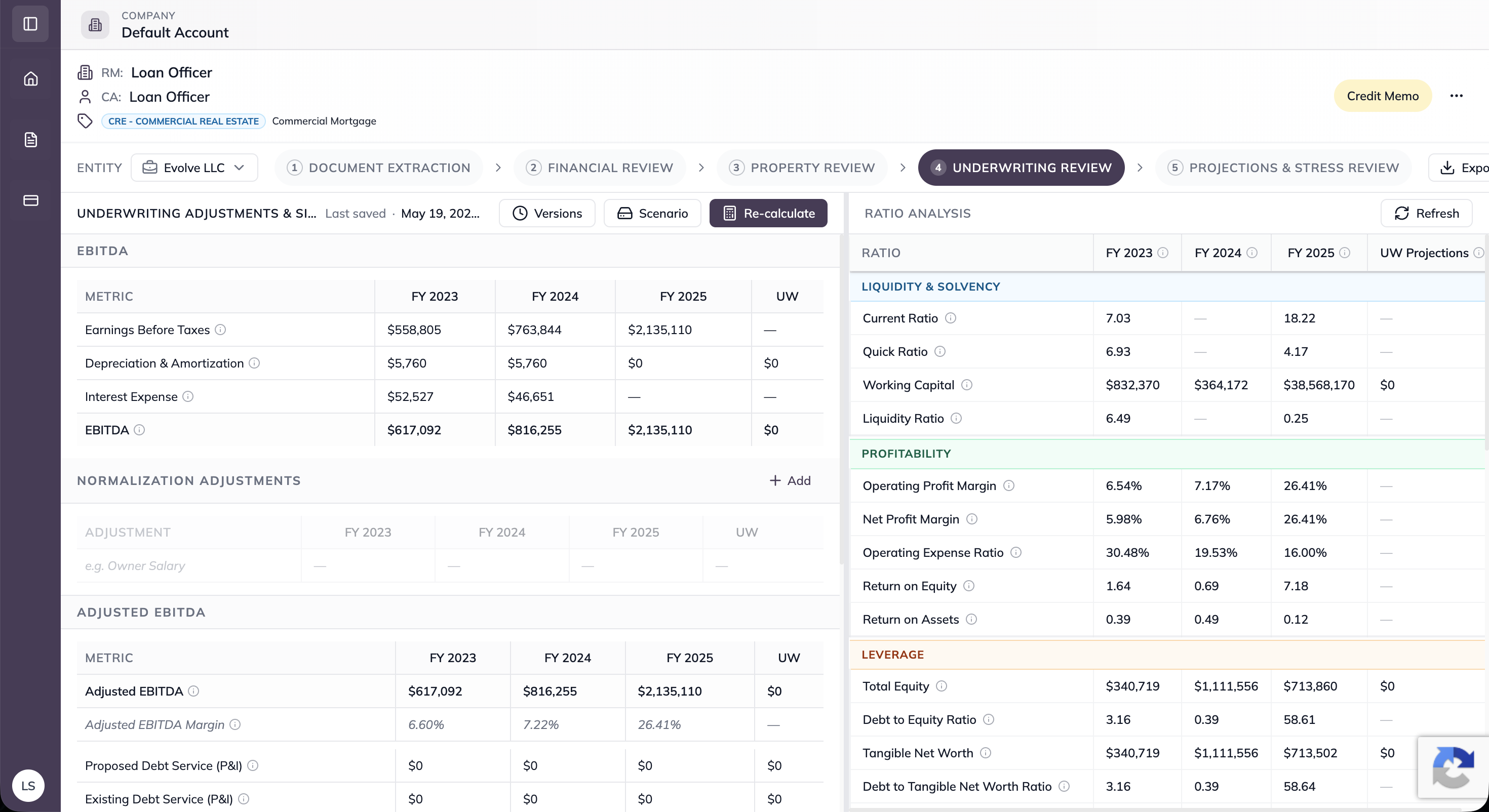
Tracks borrower activity, financial condition, and SBA reporting obligations for an up-to-date view of every loan.
Tracks schedules and requests financials, tax returns, and proof of insurance as deadlines near, so the file is ready before SBA needs it.
Reviews incoming financials against historical results, SBA and lender thresholds, and approval conditions.
Monitors SOP servicing requirements, authorization conditions, insurance, and UCC continuations, flagging anything before it lapses.
Catches deteriorating financials, missed reporting, and lapsed insurance, then triggers the site visits SBA expects.
Trail Records every document, review, and servicing action, producing the full history SBA reviews at guaranty purchase.
Measurable impact from SBA lenders that have deployed the Continuous Monitoring Agent.

Automates borrower intake, document collection, business and eligibility verification, and application preparation before underwriting begins.

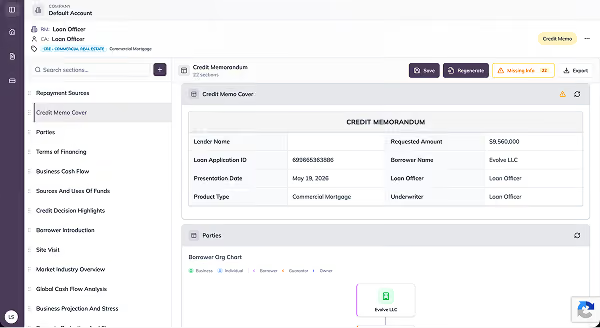
Automates financial analysis, credit and eligibility assessment, and credit memo preparation to speed SBA lending decisions while documenting the file to SBA requirements.
Pre-trained financial services capabilities the agent composes on demand to automate SBA portfolio monitoring.
Continuously evaluates borrower performance against approval conditions and SBA thresholds.
Tracks SOP servicing requirements, insurance, and reporting across the loan's life.
Flags borrower behaviors and trends tied to elevated risk and guaranty exposure.
Rolls borrower signals into portfolio and program-level views across 7(a) and 504.
Links every insight to its source document, the standard SBA and examiners expect.
Surfaces missing reports, lapsed insurance, and SOP gaps before they hit the guaranty.
With 100+ pre-built integrations across core banking platforms, loan origination and servicing systems, CRMs, and data providers, your team keeps working in familiar tools, including the systems used for 1502 reporting, while Uptiq works intelligently behind the scenes.
Many SBA portfolio teams still rely on spreadsheets, calendar reminders, and manual follow-ups to track borrower performance and servicing requirements. The challenge is that these processes become harder to manage as 7(a) and 504 portfolios grow. The Continuous Monitoring Agent replaces those manual workflows by automatically tracking reporting requirements, collecting borrower submissions, and analyzing incoming financial information.
Instead of waiting for periodic reviews, lenders gain ongoing visibility into borrower health as new data becomes available. Teams spend less time chasing documents and more time on risk management, portfolio growth, and borrower relationships.
Late financial statements, tax returns, and insurance renewals are not just administrative problems in SBA lending. They are the servicing gaps that can lead SBA to repair or deny a guaranty at purchase. The Continuous Monitoring Agent automatically tracks borrower obligations and reporting schedules, then follows up when required documents have not been submitted.
Rather than relying on manual reminders, portfolio teams get clear visibility into outstanding items and upcoming deadlines. This keeps the file aligned to SOP servicing standards and reduces the administrative burden on relationship managers, while protecting the guaranty SBA lenders depend on.
Traditional SBA portfolio reviews often happen weeks or months after important borrower information becomes available. By then, early warning signs may already have been missed. The Continuous Monitoring Agent continuously evaluates borrower financial performance, reporting activity, cash flow trends, covenant compliance, and insurance status as new information enters the system.
It looks for patterns that signal increasing risk and surfaces those findings to portfolio teams, along with the site visits or servicing actions SBA expects when a loan shows stress. This moves lenders from reactive reviews to proactive management, giving teams more time to engage borrowers and document the file before risks become larger problems.
Yes. The agent is designed to fit into existing SBA lending environments rather than replace them. Through pre-built integrations and APIs, Uptiq connects with servicing systems, loan origination platforms, CRM solutions, document repositories, core banking systems, and the tools used for 1502 reporting. Information flows automatically between systems, eliminating duplicate work and reducing manual data transfers.
Portfolio teams keep using the tools they already rely on while the Continuous Monitoring Agent handles tracking, analysis, and servicing oversight behind the scenes. This lets institutions modernize portfolio monitoring without costly infrastructure replacement projects.
SBA SOP sets a minimum cadence for financial review on most loans, and many lenders layer quarterly or semi-annual reviews on top of it. While those reviews matter, they often provide a delayed picture of portfolio health. The Continuous Monitoring Agent updates monitoring whenever new borrower information is received.
Financial statements, tax returns, and insurance updates automatically trigger fresh analysis. This creates a continuously updated view of borrower performance rather than relying solely on scheduled reviews, so lenders gain faster visibility into emerging risk, changing financial conditions, and servicing gaps across the portfolio.
Yes. SBA evaluates lenders through reviews run by the Office of Credit Risk Management, and it reviews the servicing history of each loan when a lender submits a guaranty purchase request. In both cases, a complete and well-documented file is what protects the lender. The Continuous Monitoring Agent records every borrower interaction, document submission, review, and servicing action with a full audit trail.
That documentation supports examiner and OCRM expectations, internal governance requirements, and the purchase package itself. When servicing requirements are met and documented as they happen, lenders are far better positioned to keep the guaranty intact rather than discovering gaps after a loan has already defaulted.
Traditional portfolio systems are good at storing information and tracking borrower records, but most of the actual monitoring work still happens manually. Teams spend significant time collecting reports, reviewing financials, tracking insurance and covenant requirements, and identifying exceptions.
The Continuous Monitoring Agent automates that work. It actively collects information, evaluates borrower performance, monitors SBA servicing obligations, and surfaces emerging risk without constant manual intervention. Instead of simply tracking data, it helps lenders continuously analyze and manage portfolio health so teams can focus on higher-value risk management.
Deployment is typically measured in days to a few weeks rather than months. Because the agent works alongside existing systems, there is no large-scale replacement project or major process redesign. Uptiq manages configuration, integrations, testing, and implementation while aligning the solution to your SBA servicing workflows and reporting requirements.
Many lenders start with a single program, often their 7(a) portfolio, and expand to 504 and other segments as results are demonstrated. This phased approach delivers faster time-to-value while minimizing operational disruption and implementation risk.
Our team handles scoping, configuration, and go-live. Most lenders are in production within weeks, not months, with no rip-and-replace of existing systems required.