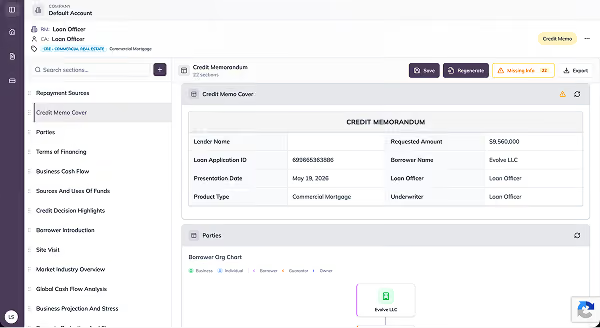
Continuously monitor borrower performance, property cash flows, covenant compliance, and collateral health so portfolio teams can identify emerging risk earlier and stay ahead of refinancing, maturity, and asset-performance challenges.
CRE lenders are navigating a difficult environment marked by rising borrowing costs, increased refinance pressure, declining valuations in some asset classes, and growing scrutiny of borrower performance. Yet portfolio monitoring remains heavily dependent on spreadsheets, periodic reviews, manual covenant tracking, and borrower follow-ups. Property financials arrive late, lease activity goes unchecked, and covenant issues often surface only after performance has already deteriorated.
The Continuous Monitoring Superagent automates covenant tracking, borrower reporting collection, property-level performance analysis, and portfolio surveillance. Instead of relying on periodic reviews, CRE lenders gain ongoing visibility into borrower health, collateral performance, and emerging risk across the life of every loan.
Continuously evaluates borrower financial performance, property cash flows, occupancy trends, lease activity, and reporting obligations to maintain an up-to-date view of loan and collateral health across the portfolio.
Tracks reporting schedules and automatically requests financial statements, rent rolls, operating statements, tax returns, property reports, and other required documents before deadlines are missed.
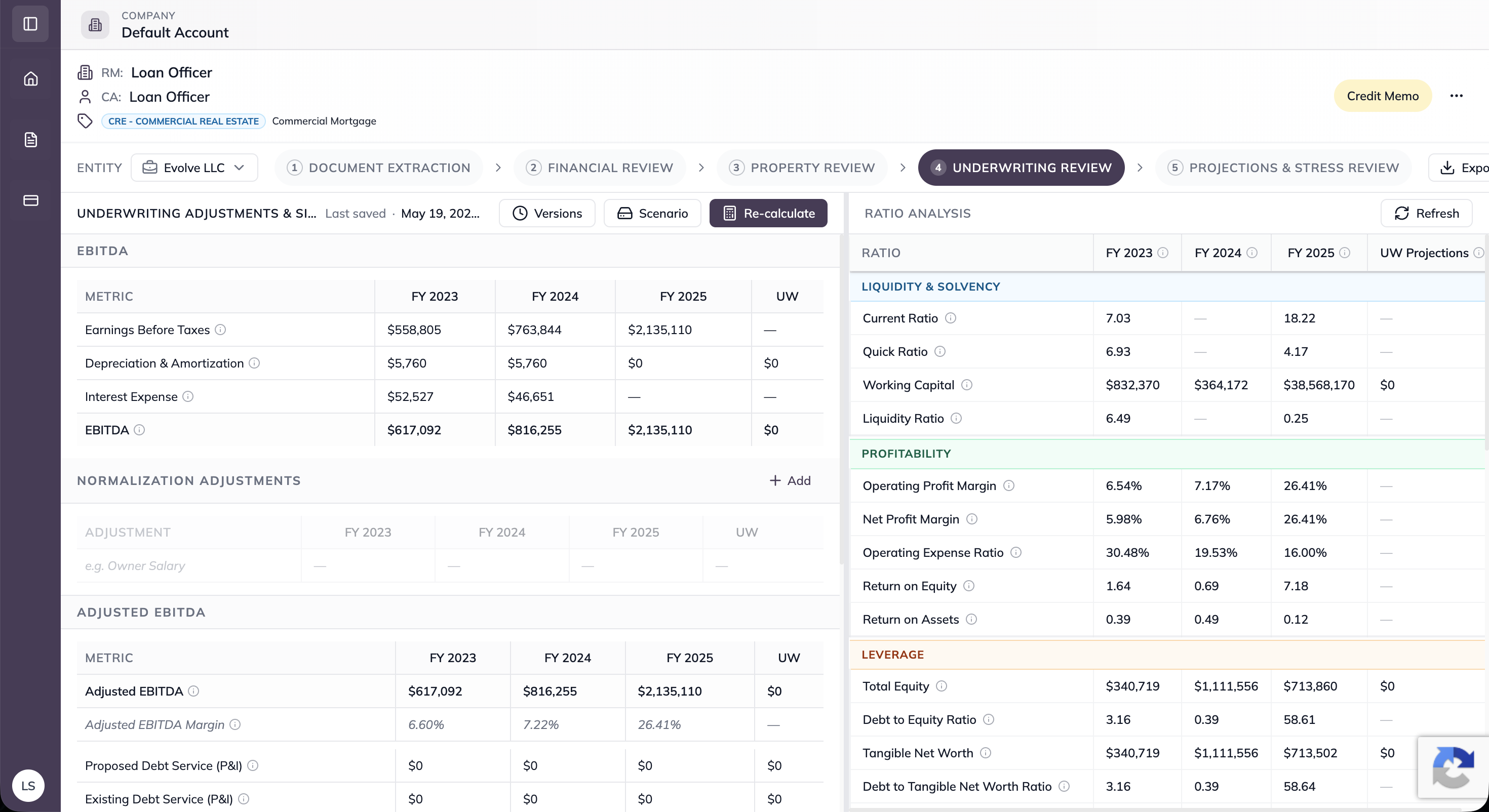
Reviews incoming borrower and property financials, recalculates DSCR, debt yield, occupancy metrics, and other covenant measures, and then compares results against approval conditions and internal credit policies.
Monitors lease expirations, tenant concentration exposure, occupancy changes, collateral performance trends, and other asset-level indicators that can affect refinanceability and loan performance.
Identifies deteriorating cash flows, declining occupancy, DSCR compression, missed reporting requirements, and emerging covenant pressure before issues become material portfolio risks.
Every borrower interaction, document submission, covenant review, financial analysis, and risk alert is recorded with complete traceability, creating a fully documented monitoring history for internal reviews and examinations.
Measurable impact from commercial real estate lenders and financial institutions that have deployed the Continuous Monitoring Superagent.

Automates borrower onboarding, document collection, property information gathering, and eligibility verification so underwriting teams receive complete, underwriting-ready files.

Automates lease abstraction, financial spreading, credit analysis, and memo preparation so underwriters can focus on structuring transactions and evaluating risk.
Pre-trained financial services capabilities that the agent composes on demand to automate CRE portfolio monitoring and risk oversight.
Tracks financial and property-level covenants, reporting schedules, and approval conditions throughout the life of the loan.
Continuously evaluates occupancy trends, lease events, rent performance, and operating metrics across commercial real estate assets.
Refreshes borrower and property-level financial reviews as new information becomes available and benchmarks performance against policy thresholds.
Identifies emerging signs of borrower stress, collateral deterioration, covenant pressure, and refinance risk.
Aggregates borrower, property, and loan-level insights into portfolio-wide views to support proactive risk management.
Maintains full traceability between every insight, calculation, and alert and its underlying source document.
With 100+ pre-built integrations across core banking platforms, loan origination and servicing systems, CRMs, and data providers, your team keeps working in familiar tools, including the systems used for 1502 reporting, while Uptiq works intelligently behind the scenes.
Many CRE lenders still depend on spreadsheets, email chains, calendar reminders, and manual tracking processes to manage covenant compliance and borrower reporting requirements. While these approaches may work for smaller portfolios, they become increasingly difficult to manage as loan volumes grow. The Continuous Monitoring Superagent automates much of this work by tracking reporting obligations, collecting borrower submissions, monitoring covenant performance, and generating ongoing portfolio insights.
Instead of manually maintaining multiple tracking systems, portfolio teams gain a centralized, real-time view of compliance status, upcoming requirements, and emerging risks across the portfolio.
The Continuous Monitoring Superagent continuously tracks borrower reporting obligations and compares expected submissions against actual activity. If a required document, such as a financial statement, rent roll, operating report, or compliance certificate, is overdue, the system automatically identifies the exception and initiates the appropriate follow-up workflow.
Portfolio managers receive visibility into missing items, upcoming deadlines, and unresolved requests without manually reviewing spreadsheets or monitoring calendars. This helps institutions maintain stronger reporting discipline while reducing the administrative burden associated with borrower follow-up.
The agent continuously evaluates borrower and property performance using information collected throughout the life of the loan. Financial results, debt service coverage trends, occupancy levels, lease expirations, rent roll performance, covenant compliance, collateral information, and other portfolio indicators are monitored as new data becomes available.
Rather than waiting for periodic reviews, the system analyzes changes in performance on an ongoing basis and highlights potential risk signals early. This gives portfolio teams more time to investigate issues, engage borrowers, and implement corrective actions before small problems develop into larger credit concerns.
Yes. The Continuous Monitoring Superagent is designed to enhance existing lending operations rather than replace current technology investments. Through pre-built integrations and APIs, the platform connects with servicing systems, loan origination platforms, CRM applications, document management repositories, core banking environments, and external data providers.
Information can flow automatically between systems, reducing manual updates and duplicate data entry. This allows portfolio teams to continue working within familiar tools while benefiting from automated monitoring, analysis, and workflow orchestration behind the scenes.
Traditional portfolio reviews are often performed on a quarterly, semi-annual, or annual basis, leaving lenders with limited visibility between review cycles. The Continuous Monitoring Superagent provides a more dynamic approach. Whenever new borrower information becomes available, such as updated financial statements, rent rolls, operating reports, covenant certificates, or other reporting documents, the system automatically refreshes its analysis.
This creates a continuously updated view of borrower and property performance, helping lenders identify meaningful changes much sooner than traditional review processes allow.
Effective portfolio oversight requires clear documentation, consistent processes, and complete visibility into borrower activity. The Continuous Monitoring Superagent maintains a comprehensive audit trail of borrower communications, document submissions, covenant reviews, risk assessments, and monitoring activities. Portfolio managers, risk teams, and executives can easily review the history of actions taken and decisions made throughout the monitoring lifecycle.
This level of transparency supports internal governance requirements, regulatory examinations, audit reviews, and portfolio reporting while helping institutions maintain consistency across teams and processes.
Traditional portfolio management systems are primarily designed to store information, manage records, and support reporting activities. While these platforms provide valuable infrastructure, much of the actual monitoring work still relies on manual effort from portfolio managers and analysts. The Continuous Monitoring Superagent goes beyond record keeping by actively collecting borrower information, evaluating financial and property performance, tracking covenant obligations, identifying exceptions, and surfacing emerging risks automatically.
Rather than simply organizing data, it continuously analyzes portfolio health and helps teams prioritize where attention is needed most.
Most financial institutions can deploy the Continuous Monitoring Superagent within days to a few weeks, depending on the complexity of their systems and monitoring requirements. Uptiq works closely with stakeholders to configure workflows, establish integrations, map reporting requirements, and align monitoring rules with existing portfolio management practices.
Since the solution is designed to operate alongside current servicing and lending platforms, institutions do not need to undertake a major infrastructure replacement or process transformation initiative. This allows teams to begin realizing value quickly while minimizing disruption to ongoing operations.
Our team handles scoping, configuration, and deployment end-to-end. Most lenders are live within weeks, not months, without replacing existing systems or disrupting portfolio operations.