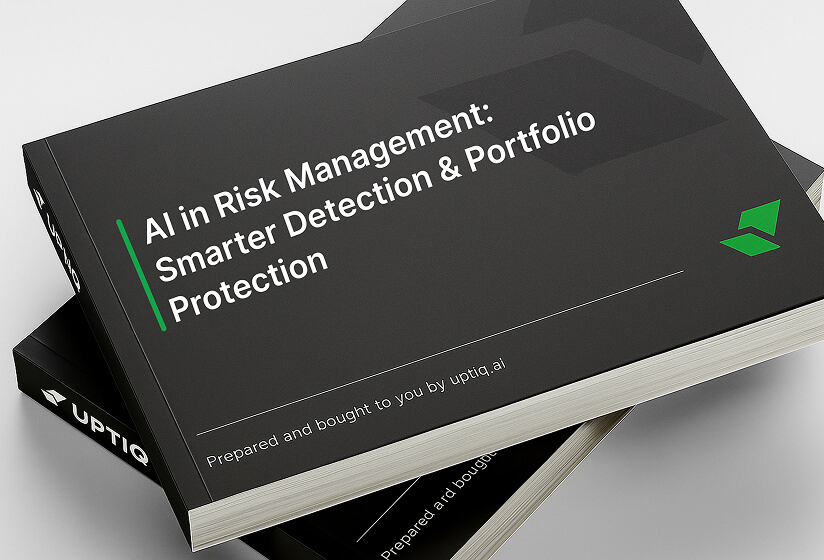
Why traditional risk models are no longer enough and what truly intelligent wealth risk management looks like
Wealth management has always been about balancing growth with protection. Advisors are expected to build portfolios that perform while ensuring client capital is protected from downside, fraud, and unexpected shocks.
For decades, risk management followed a predictable pattern. Periodic reviews. Static models. Quarterly reports. Alerts triggered only after thresholds were crossed.
That model no longer works.
Markets move faster. Fraud tactics evolve daily. Client portfolios are exposed to risks that do not wait for a scheduled review. In today’s environment, wealth firms are not just managing volatility. They are managing speed.
This is why AI powered risk management is no longer optional. It is becoming a foundational layer of modern wealth operations.
According to industry analysis, financial institutions deploying AI for risk and fraud detection are reducing false positives by up to 60 percent and cutting detection time by over 40 percent.
~ZipDo
The New Reality: Risk Has Changed
In 2025, the risk landscape facing wealth firms looked very different from even a few years ago.
Industry data shows:
- 93 percent of financial services firms now rely on AI for real time fraud detection and risk monitoring
- AI can reduce false positives in fraud detection by up to 60 percent compared to traditional systems
- AI driven transaction monitoring can analyze more than 500 risk attributes in milliseconds
- Machine learning improves credit default prediction accuracy by roughly 25 percent
~Gitrux
These numbers point to a clear shift.
Risk is no longer slow.
Risk is no longer isolated.
And traditional, manual models cannot keep pace.
Static rules and backward looking reports were designed for a world where change happened gradually. Today’s risks are dynamic and interconnected, driven by market volatility, behavioral anomalies, operational gaps, and increasingly sophisticated fraud.
From Risk Detection to Intelligent Protection
AI does not simply automate existing risk processes. It changes how risk is identified, prioritized and acted on.
1. Real Time Risk Detection
Legacy systems flag risk after impact. A limit is breached. A loss is recorded. A review is triggered.
AI agents operate differently.
They continuously analyze portfolio performance, transaction behavior, market signals, and client activity as it happens. Emerging patterns are identified early, before exposure escalates.
This allows wealth teams to move from reacting to issues to preventing them.
2. Smarter Fraud Detection With Less Noise
Modern fraud is designed to look normal. Synthetic identities, coordinated transactions, and timing based attacks often slip past traditional rules.
AI powered risk systems analyze behavior across multiple dimensions at once. Transaction patterns. Frequency. Timing. Historical context.
Just as important, AI reduces false positives so advisors and operations teams are not overwhelmed with alerts that lead nowhere.
Higher accuracy. Faster response. Stronger client trust.
~ZipDo
3. Predictive Risk and Scenario Intelligence
Traditional stress testing looks backward. It evaluates how portfolios would have performed under past conditions.
AI driven risk models simulate thousands of potential scenarios using current market signals, liquidity conditions, and concentration exposure. Advisors gain insight into how portfolios may behave before those conditions materialize.
This turns risk management into foresight, not hindsight.
4. Continuous Compliance and Governance
Risk is not only about markets. It is also about regulation.
AI agents automate regulatory checks, generate audit ready documentation, and maintain traceable logic behind decisions. Compliance becomes part of day to day operations, not a periodic fire drill.
This reduces manual workload while improving transparency and governance.
Why This Matters for Wealth Management
Wealth portfolios are influenced by more than market performance alone. Interest rates, geopolitical shifts, lending exposure, and client behavior all introduce risk.
AI risk models baseline current conditions, not outdated assumptions.
- Behavioral analysis surfaces subtle fraud before assets are impacted
- Predictive models improve credit and lending risk visibility
- Machine learning identifies abnormal shifts long before scheduled reviews
~Gitrux
In this environment, risk management cannot simply be “less reactive.” It must be anticipatory.
Human Judgment, Strengthened by AI
AI is not replacing advisors. It is removing the noise that distracts them.
By handling data intensive analysis, AI enables advisors to focus on:
- Strategic portfolio decisions
- Clear client communication during volatility
- Long term planning and trust building
This is the human plus AI model defining the next generation of wealth management.
Responsible AI and Risk Governance
Risk intelligence must be trusted to be useful.
Effective AI driven risk management includes:
- Explainable decision logic
- Bias monitoring and ethical oversight
- Human in the loop controls
- Strong data privacy and security
AI should increase confidence, not introduce new uncertainty.
The Future of Risk in Wealth Management
Risk is no longer periodic.
It is continuous.
It is intelligent.
And it is proactive.
Wealth firms that adopt AI powered risk management will:
- Detect emerging threats earlier
- Protect client portfolios more effectively
- Reduce operational burden
- Free advisors to focus on strategy and relationships
In 2025 and now beyond, treating risk as a quarterly exercise is no longer enough. The firms that win will be the ones that see risk sooner and act with clarity.
About the Author