








Banks are operating in a lending environment defined by speed, automation, and rising borrower expectations, yet many still rely on legacy systems and manual processes that slow deal flow and strain teams.

Banks are no longer competing only with other banks. Lenders and private credit funds are setting new expectations for speed and flexibility, putting traditional banking relationships under pressure.

Commercial lending is inherently complex, and rigid legacy systems make it harder to manage. Even after major technology investments, many banks struggle to realize ROI because tools don’t align with how lending teams actually work.

Banks want to grow lending volume and win more deals, but adding more analysts and operations staff isn’t sustainable. Without automation, growth often leads to longer credit cycles and heavier workloads for teams.
Uptiq’s banking software solutions are built to connect to your LOS, core banking platform, and document systems. Your team keeps working on familiar tools. Uptiq works behind the scenes. Live in 6-8 weeks, no IT project required.
Revenue activation across prospecting, onboarding, and commercial engagement.
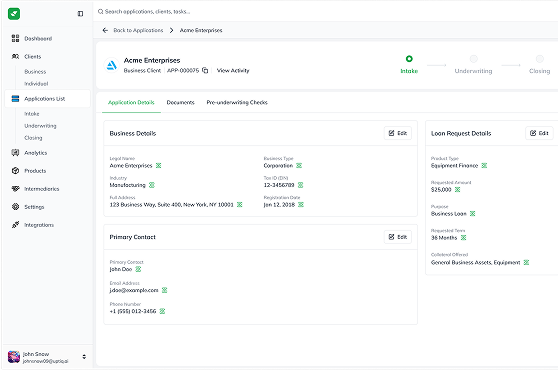
The intelligent, omni-channel onboarding agent personalizes account opening journeys based on product type, compliance requirements, and customer profile, enabling faster, seamless onboarding and higher completion rates.

Uptiq agents continuously engage customers with contextual nudges, next-best actions, and tailored product recommendations, improving activation, cross-sell, and long-term retention from day one.
Faster, compliant credit execution, from intake to close.
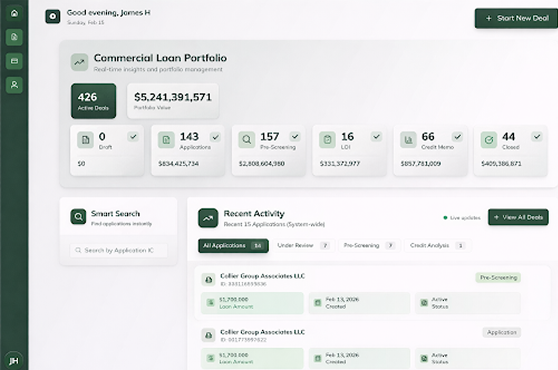
Uptiq's intake AI agent handles application collection, document gathering, and eligibility pre-screening across every channel your borrowers use. Less back-and-forth. Faster submissions. Higher conversion.
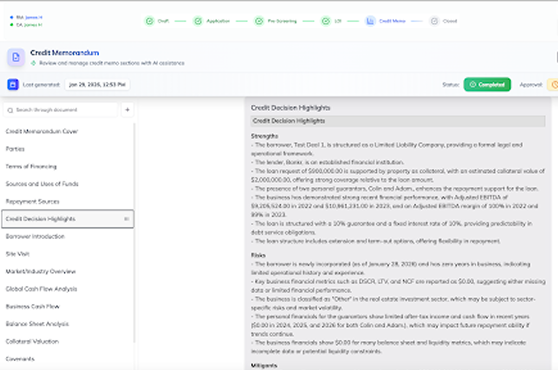
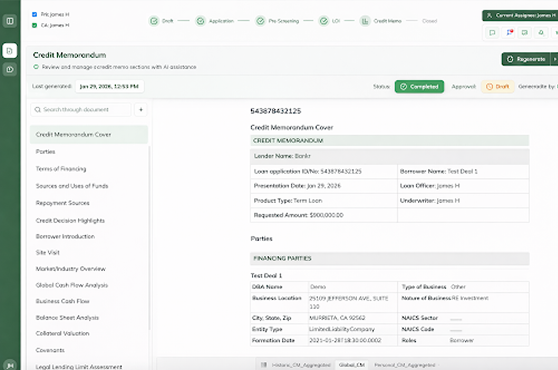
From document extraction to financial spreading to credit memo generation, Uptiq's Underwriting Agent handles the full analytical workload so your analysts spend time on decisions, not data entry.
Continuous monitoring, verification, and covenant governance.
Uptiq's Continuous Credit Monitoring Agent watches your entire loan portfolio continuously, so your team stops chasing borrowers and starts getting alerted to risk before it becomes a classified asset.
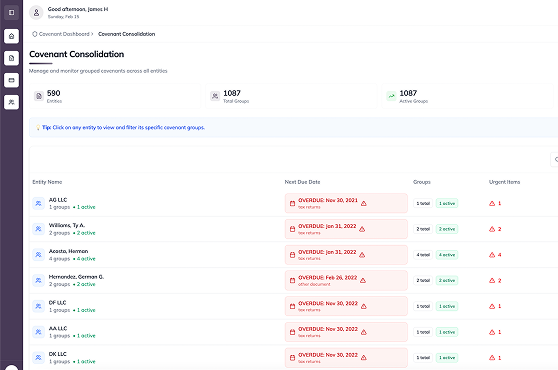
Agent tracks every covenant, sends ticklers, interacts with borrowers, and collects documents across email and chat autonomously. Connects directly to bank and accounting systems when available.
Fragmented, expensive tech stacks slow equipment finance. Uptiq replaces them with a unified AI orchestration platform.




Instead of forcing your team to fit into predefined automation tools, our experts work with you to design and deploy custom AI agents tailored to your exact use cases. Start with one agent. Scale to dozens across your institution.


Uptiq’s banking software solutions are built to connect to your LOS, core banking platform, and document systems. Your team keeps working on familiar tools. Uptiq works behind the scenes. Live in 6-8 weeks, no IT project required. If your workflows require something specific, we can build custom integrations to fit the way you operate.
Uptiq’s AI agents for banking are engineered around measurable operational outcomes. These are the numbers from banks running Uptiq’s AI agents in production.
Built from the ground up for the most regulated industry in the world. Every layer of our platform, infrastructure, data, access, compliance is engineered to meet the standards banking institutions expect.


Numbers don't lie. See how teams are transforming their operations with Uptiq.

"As a leading infrastructure bank, we power the fintech and payments ecosystem daily. Qore's AI-driven platform aligns with our vision, elevating efficiency and innovation across the financial value chain—essential infrastructure for next-generation financial services."

We'll walk you through a live demo using your document types and your credit policy. Real AI in action and no fluff.